
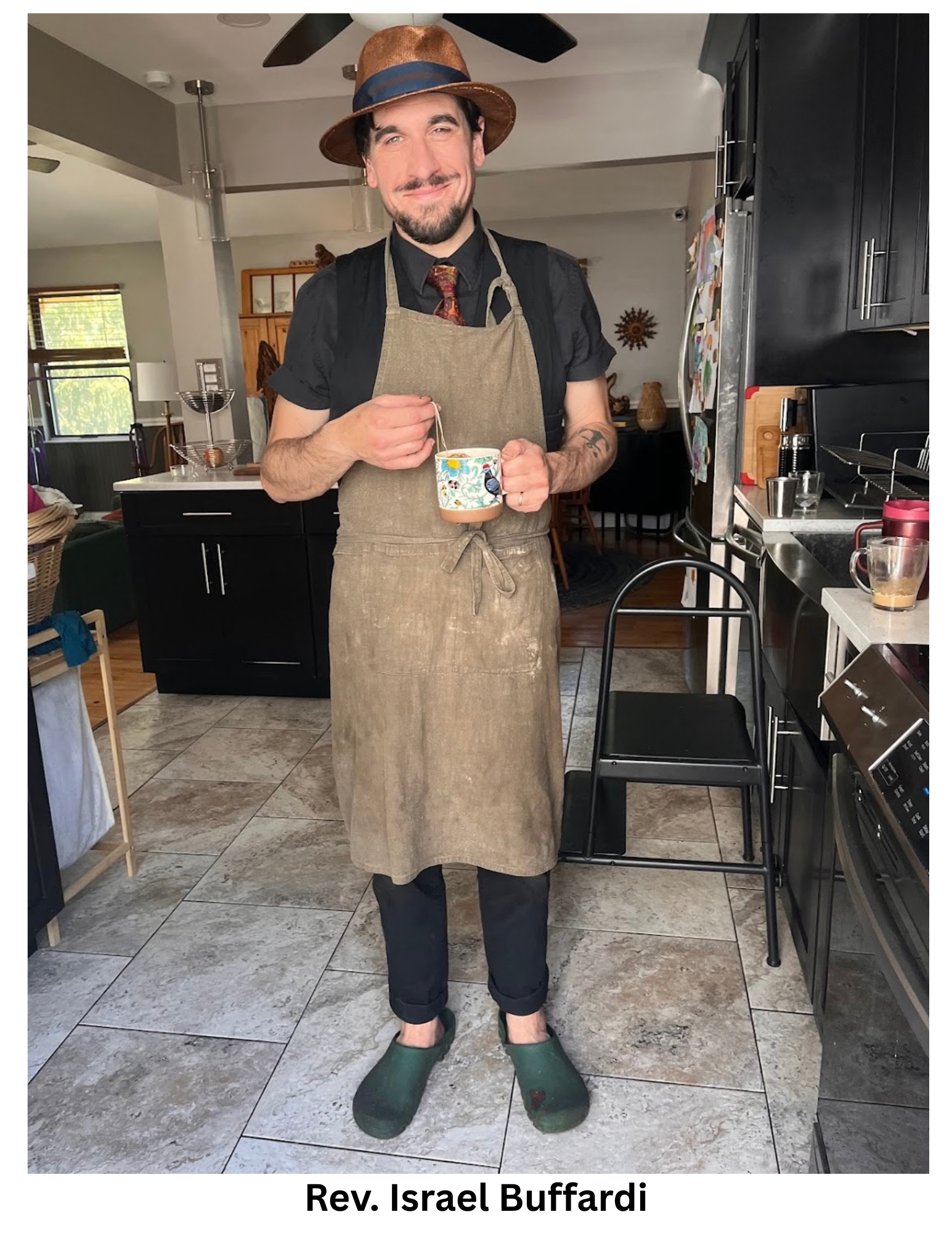
Slow Community
The week after the storm
Last Sunday morning the UUFH building had no power and my internet at home was not cooperating, so as you might have noticed, there was no service, in the hall or on Zoom. What you might not have noticed was that twenty thousand homes on the island went dark last weekend, and for a day or two many of us were reminded that we live on a pile of sand a glacier left behind, with a railroad and some highways on it, and a life on top of that which runs almost entirely on wires. It’s a strange arrangement if you stop and think about it. It’s also the one we’ve got.
From the outside it’s a strange thing we do on a Sunday, too. A hundred and some people drive to a building on Browns Road, sit in a hall next to people some of whom may or may not be grumpy, sing, share a joy or a sorrow, listen to me talk for longer than I probably should, plan some good trouble, and drink coffee. Much of it is the most ordinary thing in the world, and last Sunday we missed it, and I don’t know about you,
but something felt missing from my week because of it.
Two Sundays ago I told you that when the power flickered at my house one night, I stood in my kitchen and remembered I have the keys to our hall, and that I know a lot of the people who would show up in a real emergency. A week later the hall went dark. For the record, the keys still work. Last Sunday they just would have opened a cold building with no lights and a kitchen you can’t see well in, which is to say they would have opened a building, and the building was never really what I was glad to have the keys to.
This year I realize more and more that what I’m needing, and possibly what the world is needing, is rarely more shiny new things, new ideas, new technologies, or new ways of governing ourselves. It’s something you might call slow community, like slow food. Slow food started in Rome in 1986, when a McDonald’s opened next to the Spanish Steps and some Italians objected, the story goes, with bowls of penne. The idea was that
food ought to be local and seasonal and made by hand and eaten with other people, and that anything faster than that was a way of forgetting who we are. Slow community would be the same argument about people. It would be more like a group of people who know each other’s names, with a building and a kitchen, who meet every week in every season, in real life, the one thing that still can’t be delivered with Amazon Prime.
My best educated guess at where the word religion comes from is the Latin re-ligare, to bind back together, the same root that gives us ligament, and oblige, and rely. I know some of you will bristle at a UU minister telling you religion is about obligation, so let’s say reconnection instead. Slow community is going back to basics, to why we need each other and why we bother to gather at all, and it’s also that reconnection, and that is the part
I’m searching for us for this year, in a time when it’s hard to remember what a society with love at the center actually looks like.
Last weekend was a one- or two-day version of it for some of us. Some of you found out who on your street has the generator or the power saw, and who has the extension cord, and somebody noticed the house that stayed dark. It was also Sukkot, another thing you might have missed, which ends this week. Since the Friday night before the storm, observant Jewish families on this island have been eating dinner in a hut in the backyard with a roof of branches you can see the stars through, or this past week, mostly clouds. It’s flimsy on purpose, which as far as cosmic time is concerned is true of every human structure on earth, and that’s the first point.
The other point is that you invite people in, because that’s what you do. I don’t know how many of those huts made it through Saturday night. Some went back up Sunday with a neighbor’s help, I’d guess, which is more or less what the holiday is a reminder of. Whether you observe Sukkot or not, it would do us all some good to be reminded that our human-made structures and systems are all temporary, but the meals we
share inside them still mean something.
The slowest crop on this island BTW is fifty miles east of us, where five Shinnecock women have been growing kelp in Shinnecock Bay since 2020, in the water all winter, in weather like last weekend’s, to pull out the nitrogen that generations of septic systems have put in.
On October 11, the Sunday before Indigenous Peoples’ Day, the worship committee has invited Tecumseh Ceaser of the Metoac Indigenous Collective, whose people, the Matinecock, were living on the ground under this Fellowship when the English took it in 1653 for a list of trade goods that ended with thirty needles. October 11 is also potluck Sunday, and the rescheduled Community Volunteer Fair, which was supposed to have
been last Sunday.
-Rev.